
|
|
|
This site is owned, designed, and operated by Kenneth A. Larson who has over a quarter century of experience in design and construction of scenery for the Entertainment Industry and Theme Parks using Computer Aided and Traditional approaches to Design. Ken also has experience in other areas of Design.
|
|
Select photographs of my many visits to The Missions of the United States South and Southwest built by Spain and Mexico between 1565 and 1823. All photographs taken by Kenneth A. Larson. All rights reserved. © 2008 - 2013. |
| Explanation. |
|
By Founding Date
| ||
|
South to North
| ||
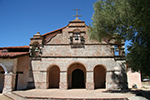
| San Antonio de Padua was the third mission built in Alta California, established in 1771. In my personal opinion, San Antonio de Padua is the best of the northern missions. Nestled in Valley of the Oaks in the middle of a US military base, Mission San Antonio de Padua is surrounded by acres of native vegetation and the remains of mission out buildings. One such out building is the mill. The surrounding lands today are much as they were when Mission San Antonio de Padua was active. This mission is 26 miles off Highway 101. Traveling |
Photo-Art Mission Art & Photo-Art | |
|
to the mission requires a drive through rolling hills and farm land. While well worth the effort to visit this mission, be aware that Mission San Antonio is on a military base and proper identification of all visitors is required along with automobile registration and proof of insurance. Don't be fooled by the Spanish Revival former Hearst Hacienda, now base headquarters building on the hill to your right. Continue a little further and the mission reveals itself ahead of you as the road curves to the right. I am sure that Mission San Antonio's isolated location on a military base has contributed to the magic of this mission experience. We visited this mission December 27, 2003 and again on September 3, 2007. Mission San Antonio de Padua now resides within an 85 acre holding within Fort Hunter Liggett. | ||
|
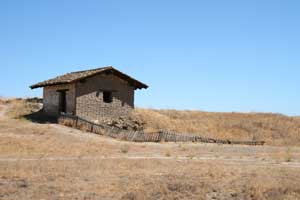
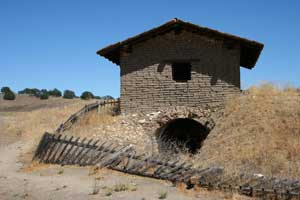
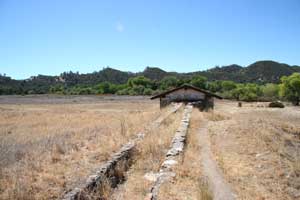
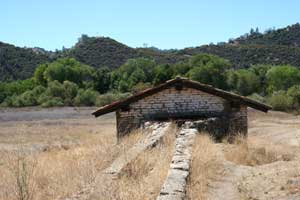
Don Gaspar de Portola traveled through Jolon Valley in 1769. He was inspired to tell Father Junipero Serra of the Valley who chose the location for the third mission in California. Mission San Antonio de Padua was founded on July 14, 1771 by Father Junipero Serra. In 1773, the mission was moved to a new site, its current location, about two and a half miles northwest, farther up the Los Robles Valley to a better source of water. In 1773, the first recorded marriage in Alto California was performed between Juan Maria Ruiz and Margaretta de Cortona. In 1806, a water-powered gristmill was constructed a few hundred feet to the south of the mission. The mill and millrace are accessible to visitors. The existing restored church is third and final church constructed between 1810 and 1813. In 1821, a three-arch portico was added twelve feet in front of the church. This new facade contained bell towers. San Antonio was the most successful mission in educating and converting the native population and eventually became one of the most prosperous of the missions. Mission industries included cattle and sheep and wine and basket weaving. While the mission was at first moderately successful, the native population was decimated by disease and the mission was eventually abandoned. In 1834, secularization saw Mission San Antonio de Padua transferred from the padres to civil control and the mission fell into neglect. In 1863, the U.S. Land Commission returned 33 acres of mission property. Following the death of the last resident priest in 1882, the mission was abandoned and the structures deteriorated. The roof collapes in 1890 due to termite damage to the timbers. Only some walls remained when reconstruction began in 1903. Between 1902 and 1908, the California Historic Landmarks League rebuilt the church wall and roof. This restoration was slowed by he 1906 San Francisco earthquake which toppled most of the walls and slowed reconstruction as work continued through 1908. 1928 saw the Franciscans invited back to care for Mission San Antonio. It was not until 1948 that grant money from the William Randolph Hearst Foundation allowed the restoration of the mission from 1948 to 1952 to its current state. |
|
I don't think there is a street address, it's just in the middle of Fort Hunter Liggett. Mailing Address: PO Box 803 Jolon, CA 93928 Phone: 408-385-4478 Proper identification of all visitors is required along with automobile registration and proof of insurance. |
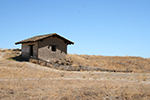
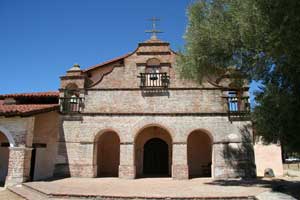 Front of church, exterior. |
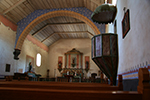
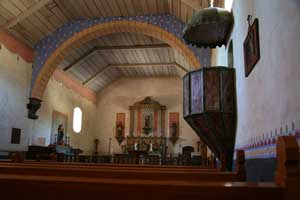
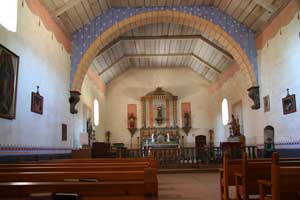 Church interior. |
|
Mission
San Antonio de Padua Main Page |
 |
 |
 |
 |
 |
 |
pending |
|
|
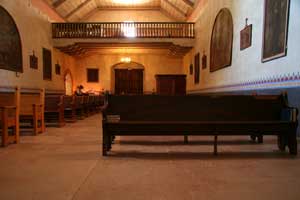
| Church. | |
|
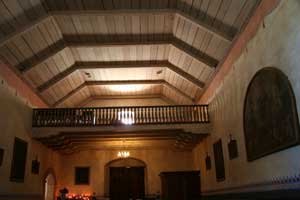
|
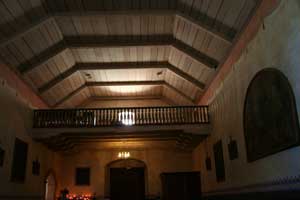
| Back of church interior. | |
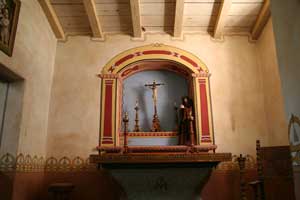 Niche. |
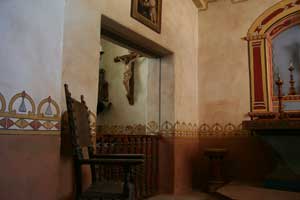 Wall painting. |
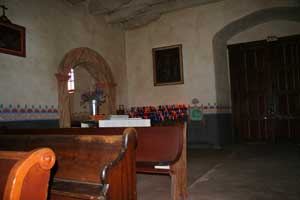
|
|
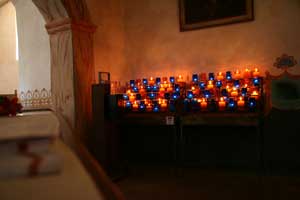
| Votive candles. | |
|
|
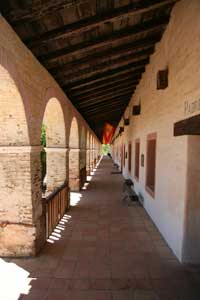
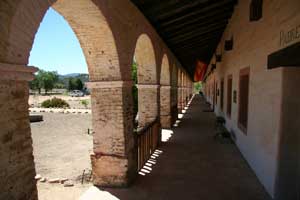
| Quadrangle. | |
|
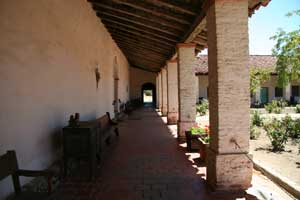
|
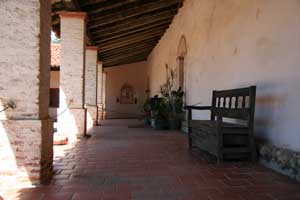
| Quadrangle. | |
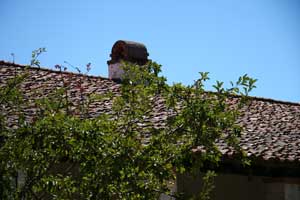 Chimney |
 Doorway. |
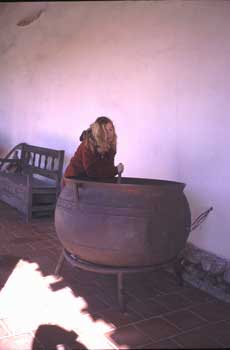 My wife volunteered to make dinner. Photo date: 12-27-03. |
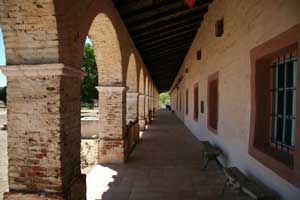 Colonnade. |
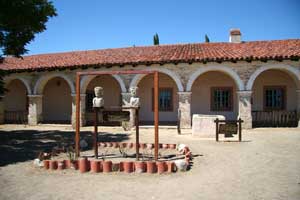 Ship figure Heads. |
|
|
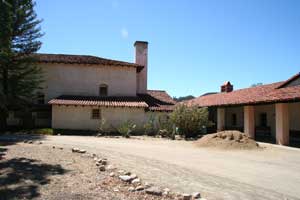
| East of the Quadrangle. | |
|
|
| East of the Quadrangle. | |
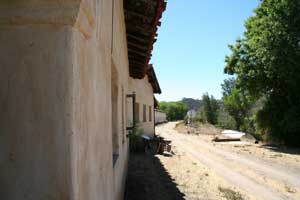 Back of the quadrangle. |
|
|
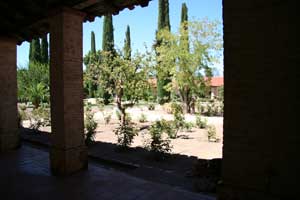
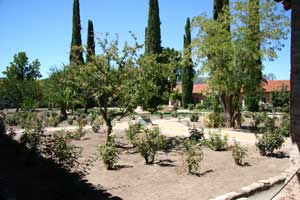
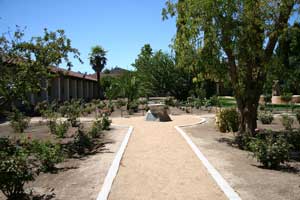
| Garden. | |
|
|
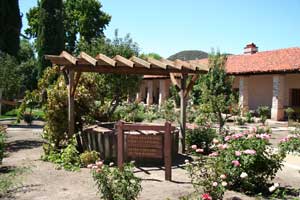
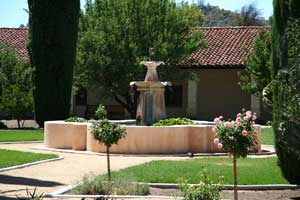
| Garden. | |
|
|
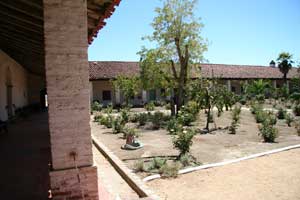
| Garden. | |
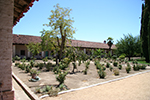
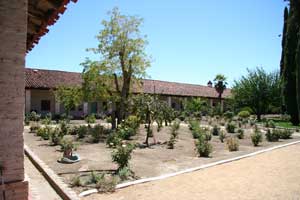 Garden. |
|
|
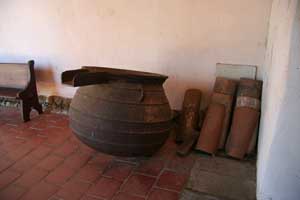
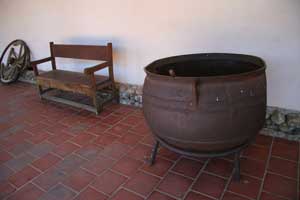
| Large kettle, probably used in making tallow. | |
 The most adorable kittens were at play. |
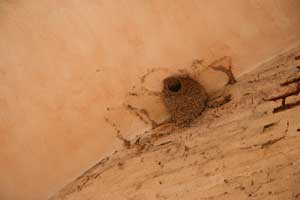 Bird nest on the underside of an eve. |
|
|
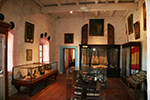
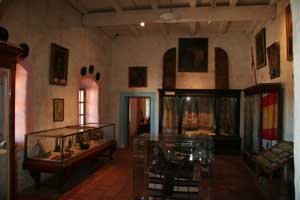
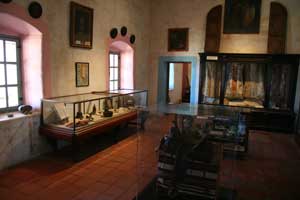
| The Museum contains many exhibits about the Mission. | |
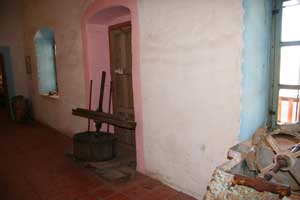 Equipment for working with olives. |
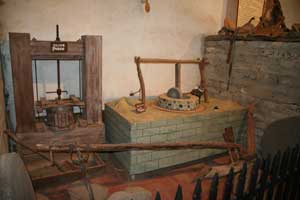 Olive press and model of olive crusher. |
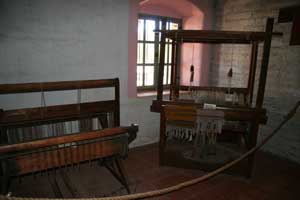 Exhibit on weaving. |
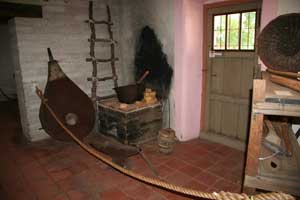 Exhibit, metal working. |
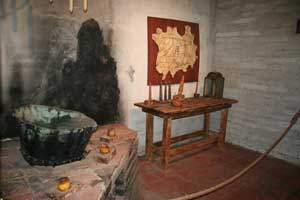 Exhibit on candle making. |
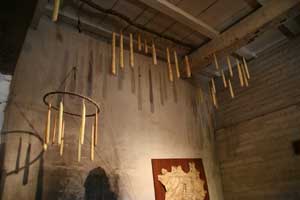 Exhibit on candle making. |
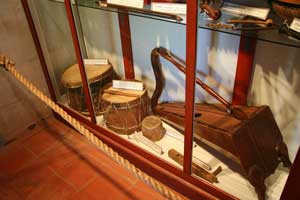 Musical instruments. |
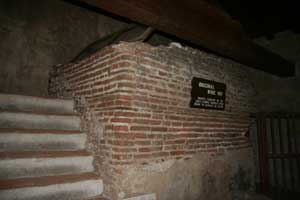 Original Wine Vat. |
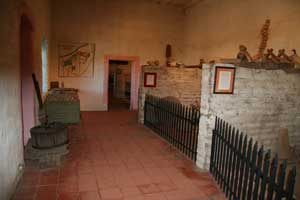 Exhibit on tile making. |
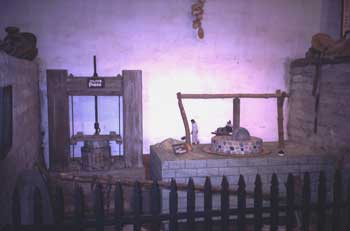 Olive press and olive crusher. Photo date: 12-27-03. |
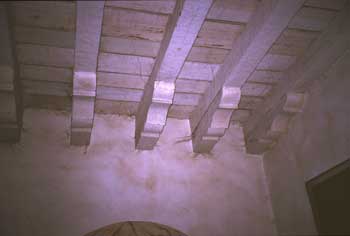 Ceiling detail. Photo date: 12-27-03. |
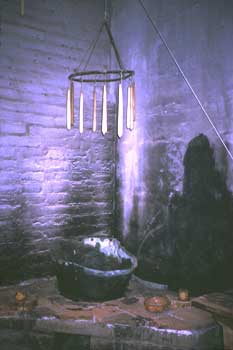 Candle making. Photo date: 12-27-03. |
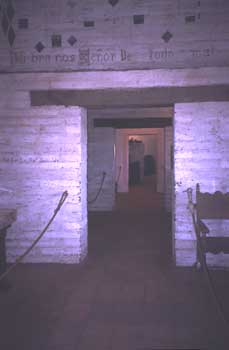 Museum. Photo date: 12-27-03. |
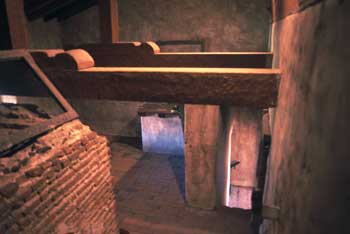 Wine cellar. Photo date: 12-27-03. |
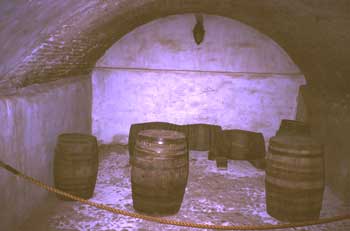 Wine cellar. Photo date: 12-27-03. |
|
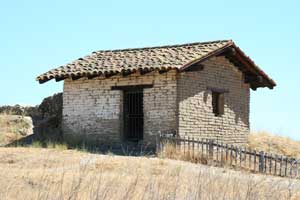
|
| Grist Mill. | |
|
|
| Grist Mill. | |
|
|
| Grist Mill. | |
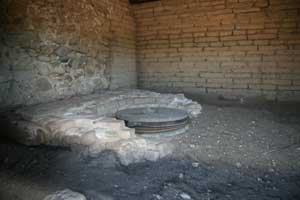 Mill interior. |
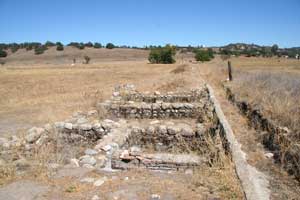 Foundation stones. |
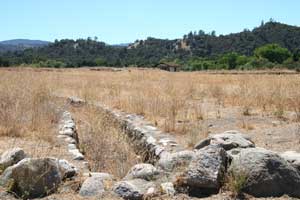
|
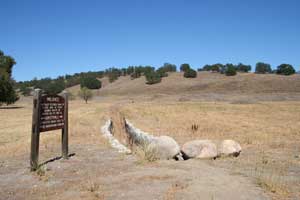
|
| Mill race. | |
|
|
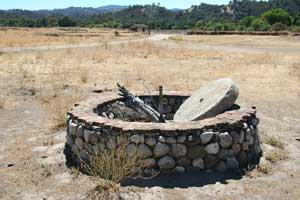
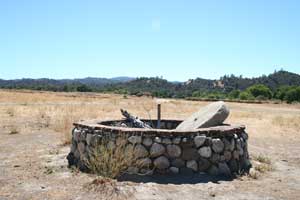
| Grinding wheel. | |
|
By Founding Date
| ||
|
South to North
| ||

|

|

|
| Note:This is not the official site for any of the places shown in US Mission Trail. US Mission Trail is not responsible for accuracy of the information. Hours of operations, prices, and exhibits are subject to change without notice. |
|
Support this Web Site I hope that you find this web site helpful. It started because of my love for the California Missions and interest in History and a desire to share my photographs and tales of my adventures. I don't allow paid advertising. This web site is for your benefit and enjoyment and I make no profit on it. For twenty years it has been supported primarily from my regular paycheck as a Set Designer. A non-tax deductable donation helps cover the cost of operating this web site and may be made to Kesign Design Consulting through PayPal. | ||
|
If you are in the need of a designer, please see my Set Designer portfolio site Set Design Portfolio. |
 | Or donations can be mailed to the address on the contact page. |
|
Links
Home |
Contact |
Sales |
Ken Larson |
K L Images |
Places Earth
|

|
This site maintained by Kenneth A. Larson. Copyright © 2004 - 2023, Kenneth A. Larson. All Rights Reserved. Website content including photographic and graphic images may not be redistributed for use on another website. |

|

|

|