
|
|
|
This site is owned, designed, and operated by Kenneth A. Larson who has over a quarter century of experience in design and construction of scenery for the Entertainment Industry and Theme Parks using Computer Aided and Traditional approaches to Design. Ken also has experience in other areas of Design.
|
|
Select photographs of my many visits to The Missions of the United States South and Southwest built by Spain and Mexico between 1565 and 1823. All photographs taken by Kenneth A. Larson. All rights reserved. © 2008 - 2013. |
| Explanation. |
| Previous Asistencia | South to North | Next Asistencia |
| Home Mission | California/Map | Asistencias/Estancia |
Personal ObservationsI discovered this Asistencia by accident while researching a trip to the Half Moon Bay Punpkin Festival. I immediately added it to our schedule. |
 Mission Art & Photo-Art |
|
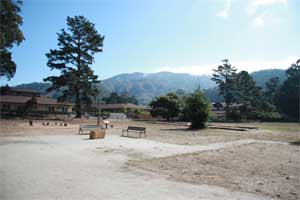
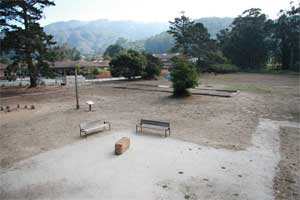
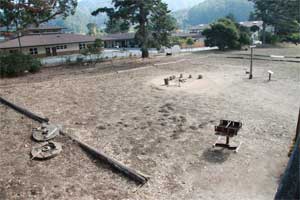
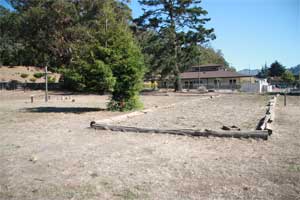
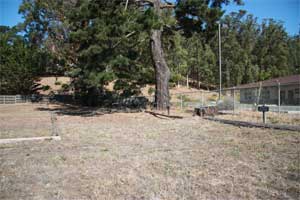
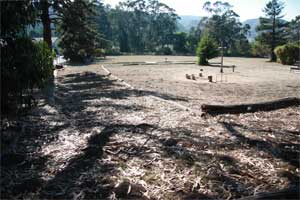
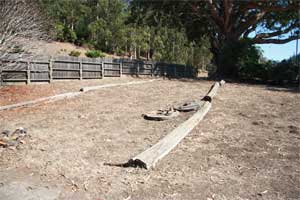
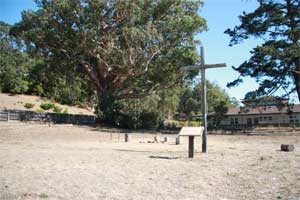
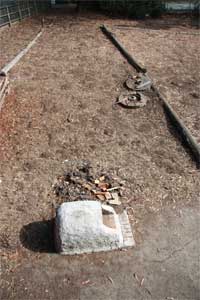
Before the arrival to Europeans, an Ohlone Indian village, called Pruristac, occupied this site. The Ohlone's enjoyed an abundance of natural resources and they were skilled basket makers and hunters and gatherers. The Portola expedition explored the vallay and later, Mission San Francisco de Asis established an asistencia at the site. The Asistencia, named Rancho San Pedro y San Pablo, was established in 1786 for Missionary work and to grow food for the mission. Fray Cambón, a Spanish-born Franciscan friar and Roman Catholic priest, is credited with being the founder of asistencia of San Pedro y San Pablo as well as Mission San Gabriel and co-founder of Mission San Francisco de Asís and Mission San Buenaventura. The asistencia was the main producer of food for Mission San Francisco, including wheat, corn, beans, barley, asparagus, peas, rosemary, an orchard with peach and quince, and a grape vineyard. The Asistencia included a granary, chapel, and three sides of a quadrangle. During the first year, the chapel, tack room, the first granary, and three other rooms were built. In 1788, two rooms were added and in 1789, a second granary, a quarters for missionaries, and a quarters for the Mayordomo were added. Today, logs outline where the building had been. The native population decline prompted the closure of the Asistencia. An epidemic in 1791 killed many of the Ohlone and the agricultural emphasis was shifted to cattle raising. The asistencia was abandoned in 1793 or 1828 or 1834 (all dates are listed in various sources) and the era closed with secularization in 1834. It is possible that roof tiles were reused for a railroad station at the Burlingame County Club. These are the only known ruins of what was believed to be a series of mission outposts on the San Francisco Peninsula. San Franciso de Asis had another asistencia which was later elevated to full mission status, San Rafael Arcangel in San Rafael. Today, logs outline the foundations that were discovered during archaeological excavations in 1978 and 1990. In 1839, part of the Rancho San Pedro, the former asistencia land, was granted to Francisco Sanchez in return for his service to Mexico. Sanchez built this adobe for his family between 1842 and 1846 on part of the old asistencia foundations. Following the death of Sanchez in 1862, the adobe and part of the land was sold in 1871 to General Edward Kirkpatrick who expanded the house. The adobe became the San Pedro Hotel in 1908 and a speakeasy during prohibition, then continued operating as a restaurant until the late 1930s. The adobe served as a farm building in the 1940s. In 1947, San Mateo County purchased the adobe and 5 acrea and by 1953, restoration was complete. The site opened as a historic site, Sanchez Adobe Historic Park, and is currently operated by San Mateo County Historical Association. California Registered Landmark 3391. the following notes need editng: Burlingame Country Club in 1893, the first country club on the West Coast, obtained permission to build a new depot, covering any costs over those of an "ordinary depot.' First opened in October 1894, this one story structure is the first permanent building in the Mission Revival style. It features 18th-century red clay handmade roof tiles taken from the Mission Dolores Asistencia at San Mateo and Mission San Antonio de Padua at Jolon. The Hospice (outpost of Mission Dolores), built around 1800 by the Spanish Padres on El Camino Real, was built to break the journey from Santa Clara and serve the Indians of Mission Dolores. Location: SW corner of Baywood and El Camino Real, San Mateo Burlingame Railroad Station Location: 290 California Dr at Burlingame Ave, Burlingame |
|
Tuesday, Wednesday, Thursday: 10:00 am - 4:00 pm Saturday and Sunday: 1:00 pm - 5:00 pm. |
|
1000 Linda Mar Boulevard Pacifica, California 94044 650-359-1462 Exit Highway 1 at Linda Mar Boulevard. Travel east about one mile. The Asistencia is on the right. |
|
 |
|
 |
|
 |
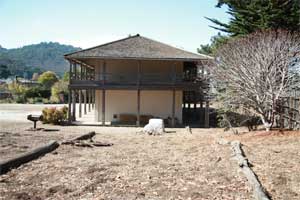 The Sanchez Adobe beyond. |
 |
|
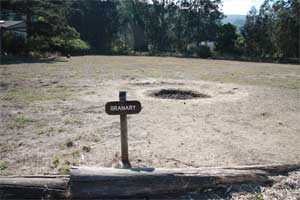 This outlines the Granary. |
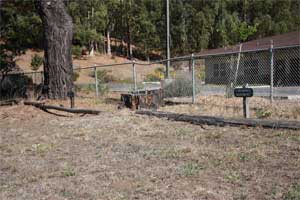 Outline of Foreman's Quarters. |
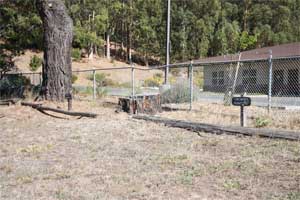 Outline of Foreman's Quarters. |
|
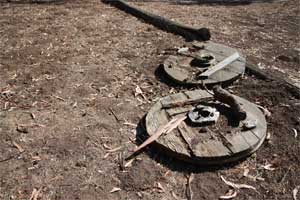 Wheels. |
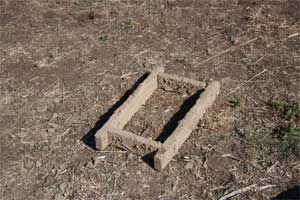 Wooden form for making adobe bricks. |
|
San Pedro y San Pablo
Asistencia Main Page |
 |
|
| Previous Asistencia | South to North | Next Asistencia |
| Home Mission | California/Map | Asistencias/Estancia |

|

|

|
| Note:This is not the official site for any of the places shown in US Mission Trail. US Mission Trail is not responsible for accuracy of the information. Hours of operations, prices, and exhibits are subject to change without notice. |
|
Support this Web Site I hope that you find this web site helpful. It started because of my love for the California Missions and interest in History and a desire to share my photographs and tales of my adventures. I don't allow paid advertising. This web site is for your benefit and enjoyment and I make no profit on it. For twenty years it has been supported primarily from my regular paycheck as a Set Designer. A non-tax deductable donation helps cover the cost of operating this web site and may be made to Kesign Design Consulting through PayPal. | ||
|
If you are in the need of a designer, please see my Set Designer portfolio site Set Design Portfolio. |
 | Or donations can be mailed to the address on the contact page. |
|
Links
Home |
Contact |
Sales |
Ken Larson |
K L Images |
Places Earth
|

|
This site maintained by Kenneth A. Larson. Copyright © 2004 - 2023, Kenneth A. Larson. All Rights Reserved. Website content including photographic and graphic images may not be redistributed for use on another website. |

|

|

|