|
|
|
This site is owned, designed, and operated by Kenneth A. Larson who has over a quarter century of experience in design and construction of scenery for the Entertainment Industry and Theme Parks using Computer Aided and Traditional approaches to Design. Ken also has experience in other areas of Design.
|
|
Select photographs of my many visits to The Missions of the United States South and Southwest built by Spain and Mexico between 1565 and 1823. All photographs taken by Kenneth A. Larson. All rights reserved. © 2008 - 2013. |
| Explanation. |
|
By Founding Date
| ||
|
South to North
| ||
Founded September 8, 1771
|
Personal ObservationsThe first time I visited Mission San Gabriel was in 1978 during the only real vacation time from work I've ever had. I took my wife while we were still dating in 2001 and again in 2004. We visited again after celebrating the Birthday of Los Angeles in 2016. This mission is the second |
 Mission Art & Photo-Art | |
|
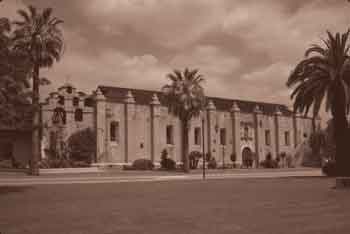
closest to my home, after San Fernando. It is still a vital part of the community and is an active parish. A large newer church and a cemetery are adjacent. Mission San Gabriel Arcángel is of an average size. The long south facade of the church is probably it's most recognized feature. What remains
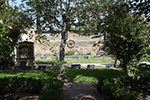
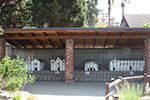
is roughly an L shape with the church, bell tower, and some shops making up one side. This L encloses a garden with the new church to the north and gift shop completing a quadrangle. One unusual feature of the garden is a row of miniature missions built in the 1930s. The Spanish revival San Gabriel Civic Auditorium, on which I assisted in the restoration, is across the street. I was saddened to learn of a fire that damaged the church on July 11, 2020. The roof and much of the interior was destroyed. I look forward to visiting again once the church is restored. | ||
|
San Gabriel Arcángel was the fourth mission founded in Alta California. It was approximately midway between Mission San Diego and Mission San Antonio de Padua, then making it the only mission in 300 miles. San Gabriel Arcángel was founded September 8, 1771 by Father Pedro Cambon and Father Angel Somera. A somewhat controversial marker may or may not be located at the original site about four miles south of the current location. The Misssion was moved to its present location in 1775. It was named for Gabriel, God's messenger angel. Nine miles west of Mission San Gabriel, a small pueblo was founded in 1781 named el pueblo de la reina de nuestra senora de los angeles de Porciuncula, or The Town of Our Lady the Queen of the Angeles of Porciuncula, which has since been shortened to Los Angeles or even, LA. San Gabriel Arcángel was one of the most prosperous missions. Because of its location at the cross roads for travelers traveling north and south between Mexico and Alto California and later east and west, it hosted many travelers and soldiers, many of which were disruptive to the work of the missionaries. The mission produced more wheat than any other mission, along with corn and beans. Tallow and soap were major products produced thanks to large herds of cattle. The oldest grape vine, planted in 1826, still grows at the mission. Mission San Gabriel was the winery for all the missions and the largest winery in California. The unique mosque-like church was begun in 1779, but not completed until 1805. Built of cut stone, brick, and mortar, it is the oldest structure if its type south of Monterey. Father Antonio Cruzado designed the church and the design was influenced by the architecture of his native Cordova, Spain. As with many missions, earthquakes are part of the history. An earthquake in 1804 damaged the original vaulted roof and ceiling. The roof was replaced with a flat roof of brick and mortar which was damaged by an earthquake in 1812. Earthquakes continued to play havoc with the mission and as recently as 1987, the mission was again damaged by an earthquake. Following the secularization in 1834, the mission and lands were taken away from the church. An inventory of Mission assets at the time it was secularization in November 1834 reads: 1 weaving room with 4 looms of wool 1 room for making brandy with 4 stills 1 room for pressing grapes with 3 wine presses 1 forge for smithy 1 structure for making soap and tallow for candles 2 water mills, 1 a half league distant, El Molino Viego and 1 in front of the mission, Chapman Mill. 163,578 vines in 4 vineyards 2,333 fruit trees in 9 orchards 12,980 head of cattle, 6,548 sheep, 2,938 horses, cattle on loan 4,443 head. 227 volumes in the Library of the Franciscans Indian population of Mission, 1,323 within Mission District and Ranch San Bernardino Assets o Mission: 11,154.12 reales Debt of Mission: 8,271.75 reales Artillery belonging to Mission: 2 canones de a 4 mortales en medias 1 canon de fierro de a 2 3 pedreros de fierro de a 2 1 canon de a 4 (prestado al ayuntamiento de Los Angeles) When the mission was returned to the Franciscans in 1843, little was left and most of the buildings were damaged beyond use. The Catholic Church regained the property in 1859. The Mission had an asistencia Nuestra Senora la Reina de Los Angeles in the Pueblo that became Los Angeles. The Mission also had an outlying ranch, or Estancia, in modern-day Redlands which is now refered to as Asistencia San Bernardino. The El Molino Viejo (The Old Mill) was built about 1816 as a gristmill supporting Mission San Gabriel Arcángel. |
|
537 West Mission Drive San Gabriel, CA 91776 From Interstate 10 Exit Del Mar Avenue or New Avenue north and refer to map. From Interstate 210: Sierra Madre Boulevard south Sierra Madre Boulevard becomes Marino Avenue as it crosses Huntinton Drive. Continue south on Marino Avenue. At fork in the road, stay left Marino Avenue. Turn right onto Junipero Serra Drive. Right turn into mission parking lot. |
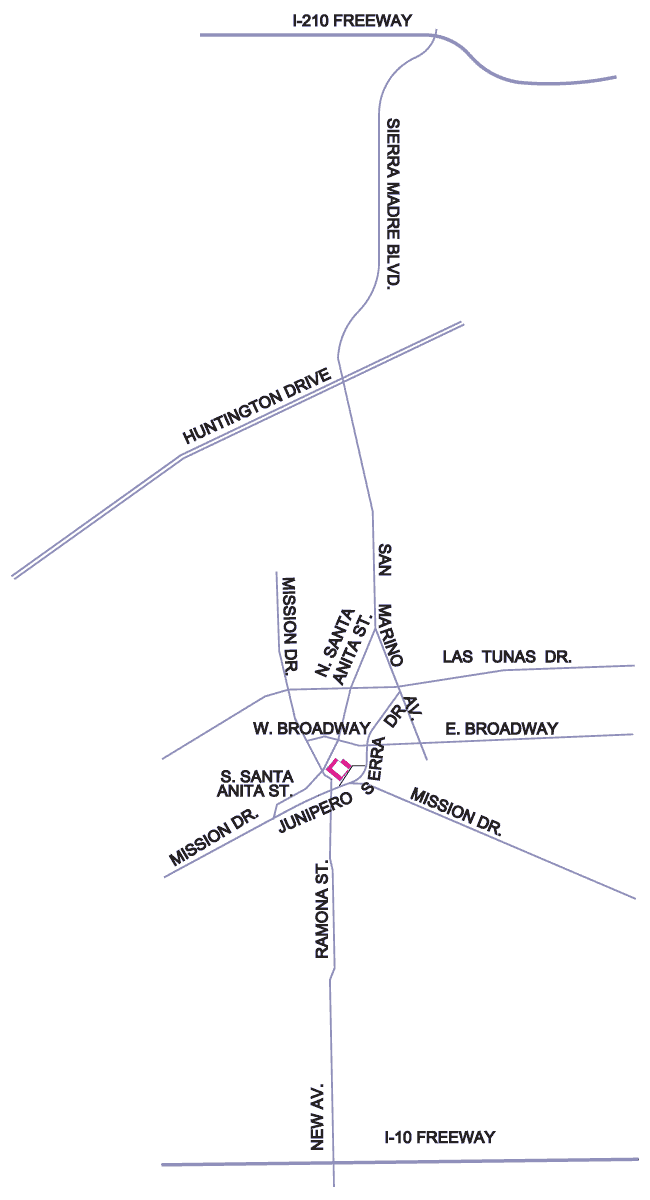 Click for a map. |
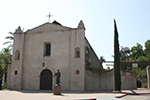
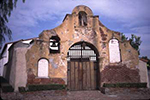
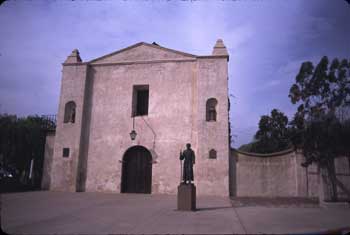 Church. Photo date: 2-16-04. |
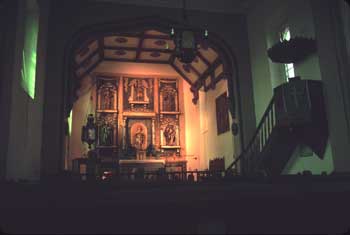 Church inerior. Photo date: 2-16-04. |
|
San Gabriel
Mission Main Page | ||||
|
By Founding Date
| ||
|
South to North
| ||

|

|

|
| Note:This is not the official site for any of the places shown in US Mission Trail. US Mission Trail is not responsible for accuracy of the information. Hours of operations, prices, and exhibits are subject to change without notice. |
|
Support this Web Site I hope that you find this web site helpful. It started because of my love for the California Missions and interest in History and a desire to share my photographs and tales of my adventures. I don't allow paid advertising. This web site is for your benefit and enjoyment and I make no profit on it. For twenty years it has been supported primarily from my regular paycheck as a Set Designer. A non-tax deductable donation helps cover the cost of operating this web site and may be made to Kesign Design Consulting through PayPal. | ||
|
If you are in the need of a designer, please see my Set Designer portfolio site Set Design Portfolio. |
 | Or donations can be mailed to the address on the contact page. |
|
Links
Home |
Contact |
Sales |
Ken Larson |
K L Images |
Places Earth
|

|
This site maintained by Kenneth A. Larson. Copyright © 2004 - 2023, Kenneth A. Larson. All Rights Reserved. Website content including photographic and graphic images may not be redistributed for use on another website. |

|

|

|